Showing posts with label walking. Show all posts

Friday, June 6, 2014

Arana Gulch Multi-Use Trail Site Visit

During fall quarter and winter break, our team did research on automated bicycle counter technology, brands, and models to identify which kind of counter technology would be best suited to Santa Cruz. Ultimately, the one location we identified as feasible to pursue during this academic year was the new Arana Gulch Multi-Use Trail that is being built. Although we did not receive any funding to purchase a counter, we have been in communication with the project manager Chris Schneiter, who works with City of Santa Cruz Public Works, about the eventual possibility of installing a bicycle/pedestrian counter near one of the entrances to the path, which will connect Frederick Street to Agnes Street to the Harbor to Brommer Street through a few paved paths. Two bridges are being constructed to span the gulches near this open space area.

Our team met with Chris Schneiter to learn more about the project and visit the in-progress construction of the paths and bridges. Below are some photos from our site visit, and you can learn more about the project on the project's blog here.

We walked out to the anchor point for one side of the new suspension bridge. It will be the first bridge of its kind in Central California, and it allows construction of the bridge without interfering with the ecosystems below. No support columns or access roads are necessary in the riverbed. The giant cables will be strung across and tightened on either side.

Here's the view of the future suspension bridge. You can see that cables have been strung across already in preparation for the bridge.

The light pink path visible on this side of the chain-link fence is part of the new multi-use trail! It's porous concrete, so water seeps into the material and into the ground below. It's smooth enough for bicycles to ride on. 

Here's a closer view of the trail material. This part of the trail leads to the Harbor and a bridge connecting to Brommer Street.


A bridge is being built from Brommer Street to the new trail, crossing Arana Creek.

The beautiful setting of the new trail beside Arana Creek.

Here's a better view of Arana Creek and the location of the new bridge from Brommer Street to the multi-use trail.

It was exciting to see the progress that has been made on this trail! If you want to learn more about the project, please visit http://aranatrailproject.blogspot.com/ and keep your eye out for updates about the bicycle counter that will hopefully be installed at the trail in the near future!

Friday, April 25, 2014

A Conversation with Cheryl Schmitt, Transportation Coordinator

Cheryl Schmitt is the Transportation Coordinator for the City of Santa Cruz Public Works Department. We interviewed her to learn more about the work she does, current bicycle projects that are happening in Santa Cruz, and her perspectives on the Rail Trail.


As Transportation Coordinator, Cheryl's work focuses on alternative-to-car transportation programs for the City of Santa Cruz. She shared that her job entails "grant writing, public outreach, and working with the community and non profits." In her work, alternative transportation includes "infrastructure designed for bikes, pedestrians, public transit, carpool, car sharing, and electric vehicles."

We asked her where her interest in transportation came from, and she shared that when she was in high school, the Santa Barbara oil spill took place. She shared, "It was a pivotal moment for me because I saw what happened in Santa Barbara. Environmentalism started to bloom at that time, and it became a focus in my life." Cheryl has her bachelor's degree in anthropology and health, and she said she is fortunate that "this job happened to align with my values."

One bicycle-related project that she's currently working on is the construction of the Arana Gulch path, which she says was "dreamed about for twenty years and is a hugely important project because it will create a link between sections of arterial roadways that currently dead-end for bicyclists." This new path will become a transportation coordinator for both bikes and pedestrians. 

Our IDEASS project has provided research and recommendations to install an automated bicycle and pedestrian counter at the new Arana Gulch path, which will provide valuable data about how many people use the new trail once it opens later this year. There is more information about this project on the Arana Gulch Multi-Use Trail Project blog here.

In addition to the Arana Gulch Multi-Use Trail Project, the "Rail Trail" is another transportation corridor project that will eventually connect Santa Cruz and Monterey Counties with a path along the railroad tracks that will be separate from car traffic. "Yes, I think that it will increase bicycle ridership in Santa Cruz," she said. "Any new facility brings users." 


Despite seeing the Rail Trail as an opportunity for increasing bicycling in Santa Cruz, she did express one concern about the project: "My own feeling is that it is a huge project requiring a lot of funding. There are many other projects on the table, and I hope that these other projects don't get pushed to the side and it all goes to the rail trail." It will still be many years before the rail trail becomes a reality, though much progress has been made already. In the meantime, it is important that the community and City continue to support other bike projects in Santa Cruz that create a more connected and safe bicycle network while also keeping the vision of the Rail Trail in mind.

The official name of the "Rail Trail" project is the Monterey Bay Sanctuary Scenic Trail Network, and fortunately "approximately $7 million of local and federal funds have already been secured for construction of initial segments," according to the Regional Transportation Commission. Learn more about this project on the website here

Cheryl also spoke about the upcoming bike plan update, which she clarified will be a "complete streets" approach to an update. The previous Bicycle Transportation Plan was produced in 2008, and Cheryl says the new one will take a more holistic approach that will focus not only on bikes but on active transportation as a whole--bicycles, pedestrians, and public transit. Complete streets is a relatively new approach to transportation planning that is designed to "work for the entire community, from ages eight to eighty," she said. 

"When you chop it up into user groups, it has this sort of discontinuous feeling, like pitting one user against another," she said of traditional plans that separate bike planning from pedestrian, public transit, and cars. "We're all using the streets together, so we should plan together." For community members interested in contributing ideas for the new update, which is happening within the next year, be on the lookout for announcements about community workshops and opportunities to get involved.

Cheryl concluded the interview by sharing some thoughts on the future of transportation in the Santa Cruz region. "It's exciting to see younger people interested in transportation and pursuing it. I encourage it as a career option, especially since nearly 50% of the greenhouse gas emissions in Santa Cruz are from transportation. We are also going to see a lot of growth in our area, in the Monterey Bay Area. According to a study by AMBAG (Association of Monterey Bay Area Governments), the urban footprint of this area is projected to grow 40% from 2005-2035, so we need to be thinking about how we are going to handle the increase in traffic."

What an inspiring conclusion to our interview, a challenge for the future but also an opportunity for innovative thinking. It's already 2014, which means we're 9 years into that potential 40% growth. In addition to a sense of opportunity through the challenge of increased volumes of people in this region, that timeline creates a sense of urgency that is hopefully fueling more efficient and effective decision-making when it comes to bicycle and sustainable transportation projects in this region. 

Thank you so much, Cheryl, for your insight and thoughts on transportation and bicycling in Santa Cruz. 

To learn more about City of Santa Cruz Transportation Programs and the work that Cheryl does, please visit the website here.

Wednesday, March 19, 2014

"An Urban Roadblock," Final Project by Chima Ubochi

Ubochi, Chima
Instructors Melissa Ott, Alex Hoffman
Kresge 99F
March 14, 2014
An Urban Roadblock
People Power: Final Project
Introduction
My People Power: Engaging Sustainable Transportation Solutions final report is regarding the issue of social justice, and transportation, both public and private. I was very inspired and I feel very honored to be able to do my research and final project on this issue, because it is mostly overlooked in society. Transportation is a vital part of our society. It is the part of the fabric in American, or any society, in general, that connects individuals from point A to point B. Everybody partakes in it any way, shape, or form at any point in their lives. There are many forms of racism and other injustices and inequalities in American society, and I am very certain that racism/injustices with respect to public transportation is overlooked because of racism/injustices in the criminal justice system, education system, employment, housing, environmental etc.
For the majority of my internship I spent 24 1/2 hours reading about social justice in the book Highway Robbery. I then had a meeting with Tawn Kennedy, the director of Greenways to school, the local youth advocacy group for bicycling. I spent a lot of time learning more and more about the difficulties that people of color and of low socioeconomic positions have to face with regards to issues of public transportation. I learned a lot during the entirety of this class.
My experiences
Prior to Friday, January 10, 2014, my first day of class, I have experienced social justice and transportation in Santa Cruz. I did my best to observe what type of people use the Santa Cruz public transportation system. Based on my observations, I have come to a conclusion that most of the individuals that use the transportation system are of lower socioeconomic classes. Besides the UC students that use the busses, I tried to do my best to categorize the riders by race. I realized that many of the riders were Latino, some were white. Also, there were a very few African-Americans, due to the fact that their population in the city in general is very low. I then tried to look at the type of forms of private transportation, I looked at the cars around town as a way to separate the affluent with the less affluent, the “haves” from the “have-nots,” the whites from the minorities, and the rich from the poor. I saw many regular vehicles, then I came across the many luxury vehicles. I then thought about how this relates to social justice, access to public transportation, etc.
After January 10, 2014, I thought about what all of this means. Prior to that date, I fondly remember associating private transportation with affluence, and being independent, which is a very common association among people. Conversely, I associated public transportation to people of lower socioeconomic statuses, and poorer people that were unable to afford a private automobile. Additionally, I associated bicycling, skateboarding, scooter riding, etc. with teenagers and others who were too poor to afford a private car. I also remember that in the city that I live in, Tracy, California, I see a lot of middle aged Latino men who may be recent immigrants riding bicycles while collecting bottles and cans to sell.
 During the first few weeks of being a member of this class, I learned about the importance of bicycling in this class, due to the fact that bicycling reduces the carbon footprint and is an alternative to a motorized vehicle which burns fossil fuels that emit CO2 and other GHGs into our atmosphere that lead to global climate change and global warming that accelerate the degradation of the U.S. Also, many places that could be reached can be reached by using bicycles as opposed to cars, but more people drive or ride cars due to the fact that it is more convenient. Additionally, we learned about the health benefits of riding bicycles.   
Highway Robbery
The book Highway Robbery: Transportation Racism and New Routes To Equity by Robert D. Bullard, Glenn S. Johnson, Angel O. Torres, is the book that I read in order to learn more about my internship topic. What I really like about this book is that it started off with a Foreword from the U.S. Congressman John Lewis, an African-American representative who recalled his experience with the Freedom Rides. He was a Freedom Rider who travelled from Washington D.C. throughout the Deep South, and into Louisiana by bus. He and his fellow riders saw the signs for colored and white residents. He and his fellow riders were attacked for trying to confront white supremacy in its many forms. He then compared that undesirable experience to today’s modern equivalent to how poor people and people of color in large urban settings are unable to use certain public transportation services. What is vital is that he connects the past with the present in order to envision a better more inclusive future. He talks about the powerful legacy of Jim Crow transportation.
The book talks about four significant metro centers in the United States: New York City, Los Angeles, Atlanta, the San Francisco Bay Area, Pittsburgh, and Baltimore. I have read about all of those areas except for the last two places.
Generally, the problems that occurred was due to the fact that most of the funding was spent on the affluent, mostly white suburbs. The least amount of money was spent in the poorer, mostly minority, less affluent inner-cities.  
The Atlanta area case was unique due to the fact that this is the only city located in the Southeastern region of the U.S. that was analyzed by this book. Atlanta’s metropolitan area has a regional transit that is called the Metropolitan Atlanta Rapid Transit Authority, or MARTA, for short (52). In the chapter “Dismantling Transit Racism in Metro Atlanta”, I read that in inner-city Atlanta, the mostly poor African-Americans and other people of color have to content with substandard, subpar transportation services, and “dirty” diesel buses, which were the oldest, most dilapidated, and most pollution-generating buses (63).    
The Atlanta area did a great job by going green. They added new “clean” CNG buses to their fleet. Well, there was a problem, most of those new “clean” busses where only available in affluent, mostly white, richer suburban areas. Meanwhile, in inner-city Atlanta, the poor, less affluent, mostly African-American and other minority populations had to contend with old “dirty’ diesel buses. This city, dubbed the capital of the South, made a substantial attempt to be more sustainable and environmentally friendly, unfortunately only the more affluent reap the full benefits. Not to mention, the poor minorities in Atlanta have to inhale the harmful fumes from the old “dirty” diesel busses, which opens the door to the issue of environmental injustice/racism.
An unseen aspect of inequality is that government funding for public transportation does not help the disadvantaged people in rural areas. The elderly and disabled individuals in those respective areas receive only 7% of the government funds for public transportation. There are rarely bus stops in those areas.
In many metropolitan areas, especially Atlanta, it is notable that white people in richer, more affluent neighborhoods, generally do not like people of color, especially African-Americans living alongside them. It is often subtle, but yet so obvious.   
Internet articles
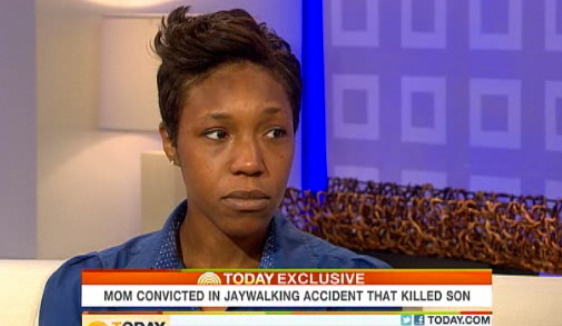
Another aspect of my internship was reading internet articles regarding my topic. Many topics struck out of me. One of the most influential topics that I read about was regarding the unfortunate tragedy of Raquel Nelson incident.
Raquel Nelson was a Georgia woman, and mother of three that received a year of probation due to the jaywalking death of her 4-year-old-son (Hanson, 2012). She was unfortunately convicted by a jury of vehicular homicide by letting her young son to jump into a busy street north of Atlanta on the night of April 10, 2010. She could have received as much as three years in prison. On that April day, she tried to cross the street with her three children when her 4-year-old son was killed by a hit-and-run driver. Ultimately, since she led her children onto a median instead of crossing at a crosswalk, she was then charged and convicted of vehicular homicide. There were petitions for her sentence to be more lenient. The main cause of her son’s death was due to poor/deteriorating infrastructure.  
According to grist.org:
Transportation systems, and streets, need to be not only smart and equitable They also need to be safe. According to the Leadership Conference’s report, Hispanic pedestrians suffer a death rate 62 percent higher, and African Americans almost 70 percent higher, than non-Hispanic whites (Adler, 2011).  
She was hit by Jerry Guy, a guy who was drinking earlier while on pain medication. Furthermore, he was partially blind and had two previous hit-and-run convictions from 1997, according to the records. He, who fled the scene, pleaded guilty to hit-and-run charges, thus he was sentenced to only six months in prison (Hanson, 2012).
These are questions that have to be answered:
What would you have done if you were in Raquel Nelson’s shoes and you needed to get your three kids home? Would you have chosen the shorter route and jaywalked or walked a little over half a mile to the cross walk before heading home (HLNtv.com Staff, 2013)?
This transportation justice issue is intertwined with a criminal justice issue.
Tawn Kennedy Meeting
Originally, I was supposed to meet him on Monday, February 24, 2014, but due to the fact that he fell ill, our meeting had to be rescheduled. Therefore, our meeting took place on Tuesday, March 11 at his office to talk with him about social justice, transportation, and youth empowerment.
I talked to him about his profession. He told me about how he orders bicycles for the teenagers of Santa Cruz, towards the end of our meeting we both took a walk to the Teen Center that was named after the African-American slave. I had a feeling that the teens present in that program come from lower income households, probably the Beach Flats area.
I could remember that I brought up a scenario involving a poor person living in the inner-city. I referred to Oakland, CA, since I am familiar with that inner-city, because I lived there when I was younger. I referred to Stockton, CA, because during the Spring 2012 semester at San Joaquin Delta College, I was enrolled as a student. The scenario was what happens if someone living in an inner-city public housing project, has to go somewhere? Let it be work, school, place of worship, store, etc.? This person is too poor to afford a private automobile. This person has to walk to the bus stop, and wait for a period of time for a bus to come and pick them up. We then discussed the violence that could claim the life of that person. We then discussed how this scenario has to deal with food justice and food deserts, because in inner-cities, there are many liquor stores, fast food restaurants, etc., and not many grocery stores where they sell fresh fruits and/vegetables. If that person wanted to go to the grocery store, they would have to catch the bus, walk a significant distance, and then get to the store. That person would obviously not be able to afford the nutritious food due to their level of income. This is obviously an undesirable, severe inconvenience. As a result, that person would be restricted to processed, high fructose corn syrup saturated food that is detrimental to one’s health, and causes obvious health problems. Due to financial limitations, that poor person most certainly not be able to afford the hospital bills.
I had to include the violence, because it goes hand-in-hand. Violence, poverty, drugs, despair, etc. When a person is limited due to their financial situation, this impacts what type of jobs are available to them. Most people understand that the majority of the best jobs available are located in the suburbs. Next, you must understand the type of jobs that are located in the inner-cities. These are minimum wage, fast food, jobs, since our inner-cities are full of fast food restaurants. This obviously is not justice.
As I have been working on my project, I have come to a realization that if the United States of America, probably the most affluent nation on the face of the earth, wants to improve as a nation, we must confront inequalities at all levels. The issues of social inequalities/racism with respect to education, employment, the environment, transportation, criminal justice, etc. are all intertwined. I have come to a conclusion that the common denominator is urban decay, and social structure. If we do not fix our deteriorating infrastructure in our once proud cities, we would not be able to solve our problems.   

Works Cited
1. "Ben Adler." Grist. N.p., n.d. Web. 14 Mar. 2014.
2. Hanson, Hilary. "Raquel Nelson Fights Murder Charges In Son's Jaywalking Death In Georgia." The Huffington Post. TheHuffingtonPost.com, 17 Apr. 2012. Web. 14 Mar. 2014.
3. "Jaywalking Mom Avoids Retrial for Son's Death." HLNtv.com. N.p., n.d. Web. 14 Mar. 2014.

Saturday, March 1, 2014

Jeff Speck on happiness and social justice, in addition to walkability

Jeff Speck has published an article called Ballet of the Sidewalk on MetropolisMag.com looking at what he didn't include in The Walkable City, happiness and social justice. It's a great, quick read that you will all enjoy. Here are two bits that I wanted to highlight:
"All the pleasures that were once provided publicly by the community are now provided privately by the middle-class house. The theater has been replaced by the giant-screen TV, the pool hall has made its way into the rec room, and the playground has become the backyard jungle gym.  
This is wrong. The privatization of the public realm means the end of community life, and we don’t need a new, better pope to tell us what that does to our spirit. [...] 
"Until now, quality of life was my ultimate measure. Now things don’t seem so simple. Somewhere, at the intersection of the quality-of-life city, the sustainable city, the equitable city, and the happy city, lies the good city. I don’t doubt that it is also the walkable city, but walkability alone does not get us there."

Social Justice & Feminism on Valentine's Day (Week 6)

On February 14, our class focused on issues of social justice and feminism. Our readings focused mostly on issues of women's access and inclination toward biking and walking since we have talked a lot about social justice and accessibility for minorities throughout the quarter. The conversations and activities we did in class were inspiring and informative, and everyone brought something unique to the conversation. In my opinion, this was one of the best days of our class so far. Thank you everyone for participating!

Alex brought bagels, as usual, as well as some delicious pomegranate jelly, the perfect color spread for Valentine's Day! We also serve coffee in class every Friday morning.

We began class, as usual, with a gratitude circle and a check-in. This week's question was "How will you show love and compassion to people in your life today in celebration of Valentine’s Day?" So many people shared that they were seeing family that weekend for the three-day weekend and that they would do something for them to show their love and appreciation. The purpose of asking this question was to remind people that Valentine's Day is about love in all forms, not just between significant others. Often people criticize Valentine's Day for being consumeristic and directed toward couples, but why not expand the definition of it to include showing love to everyone in our lives? It was nice to begin class with this acknowledgement of loving relationships each of us have in our lives--from family, to dogs, to siblings, to partners.

Then we had announcements. One of our optional readings for class that day was a chapter from Rebecca Solnit's Wanderlust about the historic treatment of women while walking in public spaces, and this topic coincided nicely with the date--Valentine's Day--because it is also the day that One Billion Rising raises awareness about sexual assault against women. If you don't know about the cause, the most important thing point is that 1 in 3 women will be beaten, sexually assaulted, or rape in their lifetime. That's one billion women worldwide, and the movement seeks to raise awareness about this and end violence against women. Our presentation slides from class feature this event and also delve into the issues brought up in our readings for the day. Click here to view it, and feel free to ask questions in the comments section for more information.


In addition to the presentation, we spoke in small groups about feminism and social justice as it relates to the other themes in our class. Some students brought up the possible set-backs that exist when women get together for "ladies night" bike events that are only designed for women (such as this one). Does this segregation serve to empower women by creating a safe and welcoming space, and/or does it also reinforce stereotypes or separations of women? Students shared various perspectives, including the suggestion that creating separate spaces for women or other groups to participate with bicycling justifies not working to make all bicycling spaces safe for these parts of the population.

For example,  Maryam and Camille gave the example of Women/Trans-friendly hours at the Bike Church Tool Cooperative downtown. By designing particular hours when women and trans-identifying people are invited to come, is there an inherent suggestion that they are not welcome at other times?

Others, including myself, suggested instead that these particular safe-space hours are designed for those who are intimidated by the idea of going to regular hours hosted by the Bike Church. Certainly, I would hope / I'm fairly certain that the Bike Church works to be inclusive and welcoming to all people who visit all the time. However, even if they are the friendliest place in the world, some--actually many--people's perceptions of bike shops or bike culture in general is that it's dominated by men or dominated by knowledgeable, know-it-all bike mechanics. By creating guaranteed, advertised safe spaces where everyone is a woman or a trans person, more people may be willing to step inside the Bike Church's doors to learn how to fix their bikes. From there, they may realize that all hours of the Bike Church are safe, but it's that initial entrance to the world of the Bike Church that may require some additional, specific marketing.

But what do you all think? I can see both sides and believe there isn't a final answer--it's about making sure all spaces are inclusive and identifying strategies to do so in genuine ways that brings everyone into the bike world so that eventually, the whole world and community is the bike world.

Some other topics students brought up included that the history of women feeling/being targeted on public streets as similar to the experiences of black men and other people of color. Chima brought up Trayvon Martin and the way that our society and law unjustly addresses hate crimes and other attacks on people based on appearance and race. He said he could identify with the sentiment that I and other women in the class expressed about feeling vulnerable walking in public places at night.

Maryam brought up the issue of gay people being targeted in public places, as well, and the conversation then moved toward how we never hear about hate crimes or murders of trans people, something I learned about as a residential adviser in Stevenson College. Since it's a topic many people don't know about, here is the website for International Transgender Day of Remembrance, which lists those trans people who were murdered worldwide simply for being transgender. It's horrible and overwhelming, and unfortunately, it's not in the public mind. Please share that link with friends to raise awareness, and then inform yourself on what it means to be transgender and how we can end discrimination against people simply because of who they are. If you're looking for more resources on this, feel free to email me or visit the UCSC Cantu Queer Center website.

Certainly the topic of this day's class was not light, and it was incredibly powerful to hear everyone's thoughts. It was clear from what students shared that they were seeing these topics in a new light and having realizations about the way others experience public spaces differently or similarly to how they do.


After this discussion, we returned to the topic of encouraging women to bike more by taking a class photo with the CycloFemme pledge, which reads "I, _____, swear to invest my energy, strength, and passion to inspire one more woman to ride a bike. I believe in the power of the pedal for positive social change, for building a healthier, happier, smarter world. I pledge to be an ambassador of the bicycle, to honor the past, celebrate the present, empower the future of women in cycling. I promise to start the revolution, to live the change I want to see, to rally another to ride with me." One of our assigned readings for the day was about this organization, whose website reads,
"CycloFemme is a socially-driven grass-roots celebration of women on bikes.... Our annual Mother’s Day ride unites riders, regardless of gender, age, ethnicity or bicycle preference to share in the joy of cycling. Year round, our global community inspires and empowers other women, by making their passion public and the joy in cycling contagious. In our first year, 163 rides were registered in 14 countries with many others joining in to celebrate in their own special way. In our second, we grew to 229 rides in 31 countries. Ride with us as we Honor the Past, Celebrate the Present, Empower the Future of Women in Cycling."
Pedrum had to leave class right before we took the photo, so Alex snapped a photo of him with his pledge before he left.

Following our pledges, we did a transportation-themed adaptation of the "Privilege Line" activity (click here to read the full activity). We had everyone stand along the line of an extension cord in the middle of the room. I read a number of statements regarding transportation privilege and students stepped forward or backward depending upon if it applied to them or not. For example, "Step forward if you have had access to a car your entire life, even if you chose not to use it." Another example was "Step backward if you feel vulnerable walking down the street at night alone."

The activity was extremely interesting and allowed for some really great dialogue at the end. Alex, who was at the farthest forward place alongside Corin, asked how it was for others in the group. "I was facing forward the whole time and I couldn't really see what was happening behind me," he said, which reflects exactly what happens when people have privilege but are not paying attention to others around them who do not have those same privileges. In this way, the activity is very experiential and allows for connections to be made based on how it feels to participate and compare where you end up versus others.

When we finished the privilege line activity, here was everyone's positions. What do you notice?

I want to say thank you again to everyone who participated in class on Valentine's Day and for being engaged and thinking about these issues in personal, real ways. I am curious what your thoughts are reading this post, for those who were or were not in class. How do these issues affect your life? What experiences have you had that provide insight into these challenges many people face regarding transportation every day?

Most importantly, what are the strategies for overcoming these barriers for women, people of color, the LGBTQQIAA community, and others who cannot freely travel or access all modes of transportation equally?

Monday, February 24, 2014

Walk to Class Challenge & Dr. Paul Lee (February 7, 2014)

A few weeks ago on February 7, our class focused on walking. We had two guest speakers, Jessica Pearson (Provost's Sustainability Intern for Transportation and Parking Services) and Dr. Paul Lee (founder of the UCSC Chadwick Garden and Santa Cruz Homeless Garden Project and former philosophy professor in the History of Consciousness department at UCSC in the 1960s).


After going over this presentation and talking about the readings, Jessica shared about her Walk to Class Challenge that's happening on April 22. There will be stations around campus and encouragement to walk to class that day instead of taking the bus. We look forward to the challenge, and we wish Jessica the best of luck in promoting it!

We were also fortunate enough that day to have a guest presentation by Dr. Paul Lee. We invited Dr. Lee because he supported the creation of a project called the Circle Trail Project and also helped preserve the land that is now Pogonip park.

Dr. Lee talked about the history of the Chadwick Garden and what it was like to work with Alan Chadwick. He shared that Alan Chadwick was "crazy" and the "hardest person to work with" but that he was integral to the organic movement. Dr. Lee called the Chadwick Garden "the spiritual center of the University" and said that "Chadwick taught students how to work" in a way that they hadn't been expected to do before.


He also shared about the Green Belt Initiative in 1977 to save Pogonip, explaining that he wanted it to become a botanic garden and horticulture belt along with the Chadwick Garden and Farm so close by. His original idea was to have the Homeless Garden Project (HGP) within Pogonip, though the HPG is now located near Long Marine Lab. The HPG came about because there were a number of homeless people in Santa Cruz in the 1980s and the first public homeless shelter was created. Dr. Lee said that there were 100s of homeless people then, but they only had room for 50. The question became what to have people do during the day, and the answer came in the form of the HPG, which provides a small stipend for working in the garden and is a safe haven for rehabilitation. Today, there are around 4000 homeless people in the area, according to Lee, and the HPG is thriving. Learn more about it here.

Side note & fun fact: Growing up in Los Gatos, my dad always saw signs that read "Save Pogonip" when he'd drive over the hill to Santa Cruz. He never knew what it meant until he grew up and realized it was the name of a land preserve. To him, it was just a funny name with no understanding behind it. I was able to tell him the other day that I met a man who helped support the "Save Pogonip" initiative. It's so fun going to college near where my dad grew up and be able to have common understandings of places that he explored when he was young.

Finally, Dr. Lee shared about the Circle Trail Project, which was the idea of a woman who approached Lee in the 1990s. The website for the Project states that "Sylvia Knapton conceived of a trail through the Santa Cruz Greenbelt that would showcase the area’s natural beauty and ecological diversity." Dr. Lee shared his experience trying to inaugurate the project, which essentially creates a walking trail between various destination points of interest in Santa Cruz, including the HGP, Long Marine Lab, the UCSC Arboretum, and Chadwick Garden, among others.

The pamphlet from Circle Trail Day in 1997.

The inauguration celebration was not as successful as he had hoped due to extremely hot weather. Despite this, Dr. Lee has been working on the Project again with a graduate student from the UCSC Digital Arts and New Media Department. They hope to design a phone application that people can install for a virtual tour of the Circle Trail so that when they visit these locations in Santa Cruz, they can learn the natural and human history of the sites. They are currently seeking people interested in working on this project You can learn more about the Circle Trail Project here and contact them through the website.

After presenting about these histories, one of the students in our class, Maryam, asked how we can pursue projects and plan things in the face of all of the red tape and obstacles to overcome in creating meaningful projects. Dr. Lee's answer was simple: "Ignore all that and just do it. Don't think about all the obstacles because if you do, you'll ask yourself 'are you out of your mind?' Don't plan, don't ask anybody first, just do it."


His point is well taken that we must take action on projects before we lose the courage to face the obstacles. My recommendation would be to take that mentality and pursue projects, finding those with the skills and ability to plan if you lack in those areas. It's about balance. In Dr. Lee's case, Alan Chadwick had the organic gardening knowledge to help design the garden. It was Dr. Lee's enthusiasm and ready-set-go attitude that got the project going. We could probably all do well with a measured dose of Dr. Lee's advice to "just do it."

Thanks, Jessica and Dr. Lee for visiting our class! We appreciated learning from both of you about projects that help support walking in Santa Cruz, and we wish you both the best of luck in your endeavors.

My Multimodal Adventure to the Silicon Valley Transportation Choices and Healthy Communities Summit (Green Gal)

This was originally posted on Green Gal's blog here on Saturday, February 22.

By 6:15 AM today, I was biking down the hill from campus, enjoying the moments of stillness right before the sun rose. Lights twinkled in the city below, a familiar view that has been part of my experience at UC Santa Cruz for the last four years. Most of the time when I see the city's twinkling lights, though, it's at night.

Seeing it this early in the morning dispelled any lingering desire to be in my warm bed, and it prepared me for a day of engagement with transportation issues. I was on my way to the Silicon Valley Transportation Choices and Healthy Communities Summit in Palo Alto, and this 15-minute bike ride was leg one of a multi-modal journey!


After biking fast down the hill with my bright yellow jacket on, I arrived at the Santa Cruz Metro Station downtown with about 5 minutes to spare. I put my bike on the bus rack, paid my $5 for the trip over the hill, and sat down to breathe. I promptly closed my eyes and half-slept while sitting and not letting my pannier bag fall over for the next hour on my way to San Jose.

As the bus pulled into the San Jose Diridon Station, I saw Green Guy's adorable red BMW 2002 (Rojito) parked in the circle waiting. (You may remember Rojito from this story!) Vehicle number three for my multi-modal journey! We took the wheels off my bike to store it in the car and then drove to the store for breakfast ingredients and coffee. We spent some of the morning with his family, and he made everyone yummy egg cheese ham muffins modeled after the Egg McMuffin but much tastier. Then we were off to Palo Alto!

Upon arriving near University Avenue, I asked Green Guy to take some photos of me with my bike for my new column "It's Wheely Easy Being Green" on Pedal Love. I modeled in front of some flowers for a few minutes, striking different poses with my beloved bike. Helmet on, or off? These are serious fashion considerations, so we took a ton of different pictures.

I still haven't decided which one I'm using for Pedal Love, but perhaps this one?

Once I felt we must have at least one good photo, we said good bye and he drove off to his job at Tesla Motors. Evidently, we're both advocates for the coolest methods of transportation, bikes and electric sports cars--but let's be honest, bikes are way cooler. I headed into the conference, which took place at the Avenidas Senior Center in downtown Palo Alto, and found a seat.

For the sake of space, I won't go into too much detail here about the conference. I will say, though, that it was awesome to be around that many transportation advocates, and it was a perfect opportunity to meet people who are working on bike advocacy and other transportation topics in the Silicon Valley. I learned about local organizations, met some new friends, and discovered potential opportunities to pursue after I graduate in June.


To learn more about the conference, please view my photo essay here.

After the conference, I biked to the Caltrain station in Palo Alto. It was only the fourth or so time I've used Caltrain, and my first time bringing a bike onboard. I had read the information online about it, but I still gravitated toward some other folks with bikes waiting at the platform. They showed me what to do, and it was so easy!


As I sat in the bike car, I glanced around at the other bikes and noticed a really cute red one (above). I snapped a photo of the bikes, and a few stops later, a fashionably dressed woman in dark purple tights, black heels, and a red coat approached the bike. I instantly recognized her as the blogger for One Woman. Many bicycles. Of course, I couldn't remember her name or the name of her blog at the time, so I didn't approach her to say hi. I receive her blog posts in my email, and I knew she lived in the area and used Caltrain between bike rides. It was cool to see her in person, especially because now we both write for Pedal Love, and she's one of only three or so Northern California writers for the site.


When I arrived in San Jose, I waited in line for my second to last leg of my journey: the Highway 17 Express back to Santa Cruz. I fell asleep on this one again, too.

Upon arriving back in Santa Cruz, I considered biking back to campus... but given my sleepiness and the paper that I have due Monday (0/5 pages complete), I opted to save my energy and waited for the bus. Fortunately, I got a spot in the bus bike rack, and then I was headed home to my dorm.

Wow, what a day filled with transportation, connections (between people and modes of transit), and a sense of community that spans the Santa Cruz and Silicon Valley communities. I feel myself being pulled somewhat toward my future in the Silicon Valley area where I'll likely move after graduating, but I also feel rooted in Santa Cruz. This morning's sunrise and a walk around my college before the sun set tugged at my heart and sense of home. It is beautiful here, the air is fresh and full of natural sounds, and I know this place. I have lived and learned and loved life in this forest for four years.

Yet, I know that I need some adventure in other places and communities, and I want to bring what I have learned and experienced on this campus and in this community to other communities. Today's conversations taught me that there are so many people in other places that are working for sustainable and just solutions; Santa Cruz is not the only place. There are dialogues and people and struggles happening in the Silicon Valley that I want to learn about and be part of, so I look forward to the future, yet I am doing my best to remain present in this coastal, redwood filled world.

Friday, February 21, 2014

Carbon Emissions in Camille's Project

My project in creating a promotional video for Green Ways to School doesn't interact directly with the idea of reducing carbon emissions. However, the goal of the video is to encourage kids to find sustainable ways to get to and from school. The more kids who do decide to ride their bikes, walk, skateboard, scooter to school, etc., the less carbon emissions they will contribute to the atmosphere. It may seem like a miniscule improvement but getting the word out through video means that there is the potential for reaching a wide audience--not just locally but nation, even worldwide.
Of course, expecting kids in Japan to see my video and be inspired to ride their bikes to school is a stretch. To get enough people on bikes to noticeably reduce carbon emissions would mean a systemic change nation-wide and worldwide. That said, the foundation People for Bikes says on their website that "half of U.S. schoolchildren are dropped off at school in the family car. If 20% of those living within two miles of school were to bike or walk instead, it would save 4.3 million miles of driving per day. Over a year, that saved driving would prevent 356,000 tons of CO2 and 21,500 tons of other pollutants from being emitted."
But starting with kids means future generations of bike commuters or walkers who've learned from their parents. And in schools, fads travel fast. The more kids get on their bikes or walk to school, the more potential there is for the fad to spread.
Seeing kids advocating for stuff seems like one of the most persuasive ways of arguing for something that you want to happen. Getting that future generation to ask for a better, cleaner world provides a solid argument that really can't be disputed. In my project, the kids that are excited about riding their bikes become advocates of the sustainable transportation movement. Though there aren't any concrete stats for understanding the extent that this project will reduce carbon emissions, the potential reach it has in affecting the community could be exponential. Included is a graphic of the

Sunday, February 16, 2014

A Woman's Perspective on Walking and Taking Public Transportation in the USA and Iran

I am an Iranian-American woman born and raised in Northern California. After more than a decade, I finally had the chance to travel to Iran again last Summer. I have used various modes of transportation to travel throughout the United States as well as Iran. This post focuses on some of my experiences and observations walking and using public transportation in California and Tehran.

Tehran is the urban capital of Iran, home to over 12 million people, and can get very congested so public transportation is allocated differently. In an extremely conservative society where it is unacceptable for a random man to stand so close to a woman, Iran has dealt with crowded cars on the metro by segregating them. Some buses have different entrances for men and women, where men use the front door and women use the back door. This often separates men and women who are traveling together. When the buses get crowded during rush hour here in Santa Cruz, California, it is somewhat acceptable when other people get in your personal space because of the circumstances. You don't particularly like it but you deal with it.


A sign on a segregated metro in Tehran, Iran

In Iran women must wear loose fitting clothes covering all their body as well as a scarf to cover their hair. A recent YouTube video of a young woman walking around the streets of Tehran with jeans and a t-shit without her hair or arms covered went viral. This is considered controversial because there could be serious consequences. She could be arrested, taken to jail, fined, interrogated... you never know. When extreme regimes get challenged they may fight back more viciously to make examples of challengers. 


My typical outfit traveling around Iran: simple and conservative

In Tehran, it is more convenient to walk to local shops. When I would get dressed to go out in Iran, I planned to wear long flow-y clothes that hid my curves because I didn't want to attract attention when I walked down the street. In the US women can wear whatever they want when they walk through the streets. All around the world, some women feel more comfortable dressing conservatively and some women prefer to show more skin but a major part of how comfortable a woman feels walking in public is how much freedom they have to wear certain clothes. 


Thursday, February 6, 2014

Streets of S.F. a road hazard as pedestrian deaths spike (SF Chronicle)

I came across this article in the SF Chronicle yesterday while eating at the 9/10 Dining Hall, and I thought it was particularly relevant to our class. The issue of bureaucratic sluggishness on moving projects ahead and the desire (and inability) to get everyone to agree on transportation projects is a huge problem for places like San Francisco. It becomes not only annoying but actually dangerous when the places that are supposed to be seeing these improvements are the site of numerous fatalities for people walking and biking.

Source here.
Perhaps this article could prompt some questions for us to explore on Feb 28 when we have a speaker panel of folks who have directly dealt with processing and implementing transportation changes like the ones discussed in this article… We can also discuss the pedestrian issues addressed in this article tomorrow, since this week's topic is walking.

Here's a snippet of the article, but you should check out the full story on the SF Chronicle website here.

"San Francisco has put together a lot of plans and budgeted a lot of money to reduce pedestrian and bike accidents and generally make its streets safer. 
"But people keep getting maimed and killed by cars - and some city officials and residents think part of the reason is that the city has been slow to follow through with its proposals to improve street designs and crack down on drivers who break traffic laws. 
"A spate of pedestrian fatalities at the end of 2013 and the beginning of this year - including the death of 6-year-old Sofia Liu on New Year's Eve and a man who was killed by a car in the Parkside neighborhood Tuesday - shows that the city's streets remain dangerous. Yet just 6 percent of San Francisco streets account for 60 percent of incidents in which pedestrians are severely injured or killed. On those streets, high-injury corridors representing 5.2 percent of the city's street miles are the site of more than half of all pedestrian deaths and injuries. 
"While the number of hazardous blocks isn't numerous, bringing down the number of deadly collisions hasn't been easy. The city has earmarked tens of millions of dollars for re-engineering dangerous corridors in recent years, but some seemingly simple projects can take years. In the meantime, bicycle and pedestrian fatalities spiked in 2013: 21 people were killed while walking, the most since 2007, and four bicyclists lost their lives, the highest number since 2001."

Wednesday, February 5, 2014

Hiking: A Social Cure for a Disconnected World (A re-post from Green Gal)

This was originally posted on Melissa's Green Gal blog here on March 27, 2013. It relates to walking and the power of walking with others, so it ties into this week's theme. It's also a love story!

In addition to being great exercise and a way to get to really awesome places in the world, hiking is also one of my favorite social activities. Since the time I was old enough to hike around Pinecrest Lake, I was making the trek with my family, trying to keep up with uncles and cousins in my little hiking boots and sunhat. I've always been a hiker, and I continue to be one, especially since I live in a hilly forest off the coast of the Pacific Ocean. How can you not be a hiker when you live two minutes from hiking trails and views of the ocean?

Given this interest in hiking and the opportunities for social engagement and community building that it offers, this past fall, a fellow student sustainability leader at UC Santa Cruz and I organized a hike into the Upper Campus trails that meander through forest and meadow above our university home. The goal was to bring together students, staff, faculty, community members interested in sustainability at UC Santa Cruz for a day hike to explore the natural space where we live, learn, and work.

My fellow sustainability hike leader and I had met at the Harvest Festival at the campus farm at the beginning of the quarter, where he served me countless bike-pedal-generated smoothies that he had made himself as I sat tabling for the Sustainability Office in the sweltering September heat.

A few days later, we spoke during dinner at the Student Environmental Center's General Gathering, and we realized we both had an interest in getting students from sustainability orgs on campus to spend more time together outside of org events. We swapped numbers, met in the library a couple times to draft an email, and then sent it out to everyone involved with sustainability work on campus, using the list-servs and email addresses that I have access to as the Education & Outreach Coordinator for the Sustainability Office (not an abuse of power, given that these hikes serve to further the aims of my job, even if I don't count those hours toward work). We even made a Facebook event for the hike. We were stoked.

The day came to meet up in the North Remote Parking Lot. I showed up first with my hiking shorts and hiking boots and reusable water bottle. No sign of anyone.

A few minutes later, I got a text message from my co-leader, who is the Transportation Coordinator for the organzation who hosted the General Gathering. He was on his way, and walked up from his redwood-surrounded apartment a few minutes later.

We waited. And waited.

"Well, it's time to go. Should we just start hiking?" No one else had shown up, and I'd received at least one text message from a friend who wasn't coming after all.

"Yeah, let's go."

We hiked up into the forest, just the two of us, on what would become not only the first of many sustainability inter-organizational hikes, but our first hike together, our first date, and our first chance to get to know each other through awesome conversation on the trail.

Hiking is a great social activity with both people you don't know well and people you do know well. You're moving around, exercising and getting high on endorphins, immersed in wild places that feed your soul, and there aren't really awkward silences. You're hiking outdoors, and silence is never awkward in the outdoors--there is so much to hear and experience and learn from when you are silent in a natural space.

We ended up hiking through Wilder Ranch State Park and all the way to the Highway 1, crossing the asphalt to reach our destination: the coast of the Pacific Ocean. We settled into some cliffs by a little cove, where the water rushed in at every wave and then receded. The sounds were soothing, the sun was warm, and we ate our lunch, enjoying the day, kind of glad that no one else showed up on the hike because of the opportunity it gave us to spend time together.

"I heard that some study found that chocolate is detected in the brain to cause more pleasure than kisses," he said to me. "But I don't really think so. What do you think?" I thought people only said those kinds of things in romantic movies, but I guess I was wrong. We had to test the theory, of course, so he shared an M&M with me, and then we shared a kiss. Like I said, hikes really are the best way to get to know someone.

Since then, he and I have organized a few other hikes, bringing together our friends, coworkers, and people who heard about the hike from Facebook or campus newsletters. I've had interesting conversations on the trail with people I never would have met otherwise, and I've realized how simple and worthwhile organizing hikes can be. People in the sustainability world of UC Santa Cruz now know about the hikes, and many who haven't come before have expressed interest in coming in the future. I cannot wait for spring quarter and the sunlight and flowers, which will hopefully draw even more people out to our hikes.

A photo of the fantastic group who came on our second inter-organizational sustainability community hike. I got to know some people on this hike who have brightened my life, and they continue to remain in my life either in person or through the perspectives I gained from talking with them.

As for hiking dates with my transportation coordinator friend, who has since become my boyfriend, we definitely continue to hike together, getting to know each other better every time. We just went on a gorgeous hike yesterday at a county park near San Jose, and we had a really good time enjoying the view from the top of a hill.


I believe that in addition to the conditions for conversation that hiking creates, the energies and connections that happen in nature between self and wilderness transform human social interactions into deeper connections when you spend time outdoors with someone one-on-one. Observing natural space, viewing the soil and vegetation and ecosystems, getting to know the environment, talking about where we would choose to live if we had been people living there thousands of years ago, and having moments of connection with nature together--all of this connects us to nature and ourselves.

Ultimately, hiking is a connecting activity, and in this digital age of social and human disconnection through overconnection with technology, hiking is a cure that I cannot get enough of. I encourage you to consider organizing a hike with your friends, significant other, or family. It's easy, fun, really inexpensive, and the opportunities for engagement with yourself, nature, and others are so rewarding!

Thanks for reading!
Green Gal