Showing posts with label social justice. Show all posts

Wednesday, March 19, 2014

"An Urban Roadblock," Final Project by Chima Ubochi

Ubochi, Chima
Instructors Melissa Ott, Alex Hoffman
Kresge 99F
March 14, 2014
An Urban Roadblock
People Power: Final Project
Introduction
My People Power: Engaging Sustainable Transportation Solutions final report is regarding the issue of social justice, and transportation, both public and private. I was very inspired and I feel very honored to be able to do my research and final project on this issue, because it is mostly overlooked in society. Transportation is a vital part of our society. It is the part of the fabric in American, or any society, in general, that connects individuals from point A to point B. Everybody partakes in it any way, shape, or form at any point in their lives. There are many forms of racism and other injustices and inequalities in American society, and I am very certain that racism/injustices with respect to public transportation is overlooked because of racism/injustices in the criminal justice system, education system, employment, housing, environmental etc.
For the majority of my internship I spent 24 1/2 hours reading about social justice in the book Highway Robbery. I then had a meeting with Tawn Kennedy, the director of Greenways to school, the local youth advocacy group for bicycling. I spent a lot of time learning more and more about the difficulties that people of color and of low socioeconomic positions have to face with regards to issues of public transportation. I learned a lot during the entirety of this class.
My experiences
Prior to Friday, January 10, 2014, my first day of class, I have experienced social justice and transportation in Santa Cruz. I did my best to observe what type of people use the Santa Cruz public transportation system. Based on my observations, I have come to a conclusion that most of the individuals that use the transportation system are of lower socioeconomic classes. Besides the UC students that use the busses, I tried to do my best to categorize the riders by race. I realized that many of the riders were Latino, some were white. Also, there were a very few African-Americans, due to the fact that their population in the city in general is very low. I then tried to look at the type of forms of private transportation, I looked at the cars around town as a way to separate the affluent with the less affluent, the “haves” from the “have-nots,” the whites from the minorities, and the rich from the poor. I saw many regular vehicles, then I came across the many luxury vehicles. I then thought about how this relates to social justice, access to public transportation, etc.
After January 10, 2014, I thought about what all of this means. Prior to that date, I fondly remember associating private transportation with affluence, and being independent, which is a very common association among people. Conversely, I associated public transportation to people of lower socioeconomic statuses, and poorer people that were unable to afford a private automobile. Additionally, I associated bicycling, skateboarding, scooter riding, etc. with teenagers and others who were too poor to afford a private car. I also remember that in the city that I live in, Tracy, California, I see a lot of middle aged Latino men who may be recent immigrants riding bicycles while collecting bottles and cans to sell.
 During the first few weeks of being a member of this class, I learned about the importance of bicycling in this class, due to the fact that bicycling reduces the carbon footprint and is an alternative to a motorized vehicle which burns fossil fuels that emit CO2 and other GHGs into our atmosphere that lead to global climate change and global warming that accelerate the degradation of the U.S. Also, many places that could be reached can be reached by using bicycles as opposed to cars, but more people drive or ride cars due to the fact that it is more convenient. Additionally, we learned about the health benefits of riding bicycles.   
Highway Robbery
The book Highway Robbery: Transportation Racism and New Routes To Equity by Robert D. Bullard, Glenn S. Johnson, Angel O. Torres, is the book that I read in order to learn more about my internship topic. What I really like about this book is that it started off with a Foreword from the U.S. Congressman John Lewis, an African-American representative who recalled his experience with the Freedom Rides. He was a Freedom Rider who travelled from Washington D.C. throughout the Deep South, and into Louisiana by bus. He and his fellow riders saw the signs for colored and white residents. He and his fellow riders were attacked for trying to confront white supremacy in its many forms. He then compared that undesirable experience to today’s modern equivalent to how poor people and people of color in large urban settings are unable to use certain public transportation services. What is vital is that he connects the past with the present in order to envision a better more inclusive future. He talks about the powerful legacy of Jim Crow transportation.
The book talks about four significant metro centers in the United States: New York City, Los Angeles, Atlanta, the San Francisco Bay Area, Pittsburgh, and Baltimore. I have read about all of those areas except for the last two places.
Generally, the problems that occurred was due to the fact that most of the funding was spent on the affluent, mostly white suburbs. The least amount of money was spent in the poorer, mostly minority, less affluent inner-cities.  
The Atlanta area case was unique due to the fact that this is the only city located in the Southeastern region of the U.S. that was analyzed by this book. Atlanta’s metropolitan area has a regional transit that is called the Metropolitan Atlanta Rapid Transit Authority, or MARTA, for short (52). In the chapter “Dismantling Transit Racism in Metro Atlanta”, I read that in inner-city Atlanta, the mostly poor African-Americans and other people of color have to content with substandard, subpar transportation services, and “dirty” diesel buses, which were the oldest, most dilapidated, and most pollution-generating buses (63).    
The Atlanta area did a great job by going green. They added new “clean” CNG buses to their fleet. Well, there was a problem, most of those new “clean” busses where only available in affluent, mostly white, richer suburban areas. Meanwhile, in inner-city Atlanta, the poor, less affluent, mostly African-American and other minority populations had to contend with old “dirty’ diesel buses. This city, dubbed the capital of the South, made a substantial attempt to be more sustainable and environmentally friendly, unfortunately only the more affluent reap the full benefits. Not to mention, the poor minorities in Atlanta have to inhale the harmful fumes from the old “dirty” diesel busses, which opens the door to the issue of environmental injustice/racism.
An unseen aspect of inequality is that government funding for public transportation does not help the disadvantaged people in rural areas. The elderly and disabled individuals in those respective areas receive only 7% of the government funds for public transportation. There are rarely bus stops in those areas.
In many metropolitan areas, especially Atlanta, it is notable that white people in richer, more affluent neighborhoods, generally do not like people of color, especially African-Americans living alongside them. It is often subtle, but yet so obvious.   
Internet articles
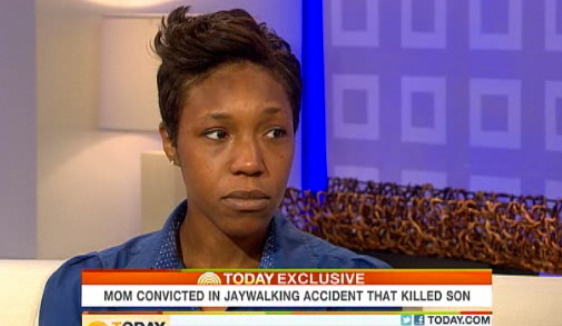
Another aspect of my internship was reading internet articles regarding my topic. Many topics struck out of me. One of the most influential topics that I read about was regarding the unfortunate tragedy of Raquel Nelson incident.
Raquel Nelson was a Georgia woman, and mother of three that received a year of probation due to the jaywalking death of her 4-year-old-son (Hanson, 2012). She was unfortunately convicted by a jury of vehicular homicide by letting her young son to jump into a busy street north of Atlanta on the night of April 10, 2010. She could have received as much as three years in prison. On that April day, she tried to cross the street with her three children when her 4-year-old son was killed by a hit-and-run driver. Ultimately, since she led her children onto a median instead of crossing at a crosswalk, she was then charged and convicted of vehicular homicide. There were petitions for her sentence to be more lenient. The main cause of her son’s death was due to poor/deteriorating infrastructure.  
According to grist.org:
Transportation systems, and streets, need to be not only smart and equitable They also need to be safe. According to the Leadership Conference’s report, Hispanic pedestrians suffer a death rate 62 percent higher, and African Americans almost 70 percent higher, than non-Hispanic whites (Adler, 2011).  
She was hit by Jerry Guy, a guy who was drinking earlier while on pain medication. Furthermore, he was partially blind and had two previous hit-and-run convictions from 1997, according to the records. He, who fled the scene, pleaded guilty to hit-and-run charges, thus he was sentenced to only six months in prison (Hanson, 2012).
These are questions that have to be answered:
What would you have done if you were in Raquel Nelson’s shoes and you needed to get your three kids home? Would you have chosen the shorter route and jaywalked or walked a little over half a mile to the cross walk before heading home (HLNtv.com Staff, 2013)?
This transportation justice issue is intertwined with a criminal justice issue.
Tawn Kennedy Meeting
Originally, I was supposed to meet him on Monday, February 24, 2014, but due to the fact that he fell ill, our meeting had to be rescheduled. Therefore, our meeting took place on Tuesday, March 11 at his office to talk with him about social justice, transportation, and youth empowerment.
I talked to him about his profession. He told me about how he orders bicycles for the teenagers of Santa Cruz, towards the end of our meeting we both took a walk to the Teen Center that was named after the African-American slave. I had a feeling that the teens present in that program come from lower income households, probably the Beach Flats area.
I could remember that I brought up a scenario involving a poor person living in the inner-city. I referred to Oakland, CA, since I am familiar with that inner-city, because I lived there when I was younger. I referred to Stockton, CA, because during the Spring 2012 semester at San Joaquin Delta College, I was enrolled as a student. The scenario was what happens if someone living in an inner-city public housing project, has to go somewhere? Let it be work, school, place of worship, store, etc.? This person is too poor to afford a private automobile. This person has to walk to the bus stop, and wait for a period of time for a bus to come and pick them up. We then discussed the violence that could claim the life of that person. We then discussed how this scenario has to deal with food justice and food deserts, because in inner-cities, there are many liquor stores, fast food restaurants, etc., and not many grocery stores where they sell fresh fruits and/vegetables. If that person wanted to go to the grocery store, they would have to catch the bus, walk a significant distance, and then get to the store. That person would obviously not be able to afford the nutritious food due to their level of income. This is obviously an undesirable, severe inconvenience. As a result, that person would be restricted to processed, high fructose corn syrup saturated food that is detrimental to one’s health, and causes obvious health problems. Due to financial limitations, that poor person most certainly not be able to afford the hospital bills.
I had to include the violence, because it goes hand-in-hand. Violence, poverty, drugs, despair, etc. When a person is limited due to their financial situation, this impacts what type of jobs are available to them. Most people understand that the majority of the best jobs available are located in the suburbs. Next, you must understand the type of jobs that are located in the inner-cities. These are minimum wage, fast food, jobs, since our inner-cities are full of fast food restaurants. This obviously is not justice.
As I have been working on my project, I have come to a realization that if the United States of America, probably the most affluent nation on the face of the earth, wants to improve as a nation, we must confront inequalities at all levels. The issues of social inequalities/racism with respect to education, employment, the environment, transportation, criminal justice, etc. are all intertwined. I have come to a conclusion that the common denominator is urban decay, and social structure. If we do not fix our deteriorating infrastructure in our once proud cities, we would not be able to solve our problems.   

Works Cited
1. "Ben Adler." Grist. N.p., n.d. Web. 14 Mar. 2014.
2. Hanson, Hilary. "Raquel Nelson Fights Murder Charges In Son's Jaywalking Death In Georgia." The Huffington Post. TheHuffingtonPost.com, 17 Apr. 2012. Web. 14 Mar. 2014.
3. "Jaywalking Mom Avoids Retrial for Son's Death." HLNtv.com. N.p., n.d. Web. 14 Mar. 2014.

Saturday, March 1, 2014

Social Justice & Feminism on Valentine's Day (Week 6)

On February 14, our class focused on issues of social justice and feminism. Our readings focused mostly on issues of women's access and inclination toward biking and walking since we have talked a lot about social justice and accessibility for minorities throughout the quarter. The conversations and activities we did in class were inspiring and informative, and everyone brought something unique to the conversation. In my opinion, this was one of the best days of our class so far. Thank you everyone for participating!

Alex brought bagels, as usual, as well as some delicious pomegranate jelly, the perfect color spread for Valentine's Day! We also serve coffee in class every Friday morning.

We began class, as usual, with a gratitude circle and a check-in. This week's question was "How will you show love and compassion to people in your life today in celebration of Valentine’s Day?" So many people shared that they were seeing family that weekend for the three-day weekend and that they would do something for them to show their love and appreciation. The purpose of asking this question was to remind people that Valentine's Day is about love in all forms, not just between significant others. Often people criticize Valentine's Day for being consumeristic and directed toward couples, but why not expand the definition of it to include showing love to everyone in our lives? It was nice to begin class with this acknowledgement of loving relationships each of us have in our lives--from family, to dogs, to siblings, to partners.

Then we had announcements. One of our optional readings for class that day was a chapter from Rebecca Solnit's Wanderlust about the historic treatment of women while walking in public spaces, and this topic coincided nicely with the date--Valentine's Day--because it is also the day that One Billion Rising raises awareness about sexual assault against women. If you don't know about the cause, the most important thing point is that 1 in 3 women will be beaten, sexually assaulted, or rape in their lifetime. That's one billion women worldwide, and the movement seeks to raise awareness about this and end violence against women. Our presentation slides from class feature this event and also delve into the issues brought up in our readings for the day. Click here to view it, and feel free to ask questions in the comments section for more information.


In addition to the presentation, we spoke in small groups about feminism and social justice as it relates to the other themes in our class. Some students brought up the possible set-backs that exist when women get together for "ladies night" bike events that are only designed for women (such as this one). Does this segregation serve to empower women by creating a safe and welcoming space, and/or does it also reinforce stereotypes or separations of women? Students shared various perspectives, including the suggestion that creating separate spaces for women or other groups to participate with bicycling justifies not working to make all bicycling spaces safe for these parts of the population.

For example,  Maryam and Camille gave the example of Women/Trans-friendly hours at the Bike Church Tool Cooperative downtown. By designing particular hours when women and trans-identifying people are invited to come, is there an inherent suggestion that they are not welcome at other times?

Others, including myself, suggested instead that these particular safe-space hours are designed for those who are intimidated by the idea of going to regular hours hosted by the Bike Church. Certainly, I would hope / I'm fairly certain that the Bike Church works to be inclusive and welcoming to all people who visit all the time. However, even if they are the friendliest place in the world, some--actually many--people's perceptions of bike shops or bike culture in general is that it's dominated by men or dominated by knowledgeable, know-it-all bike mechanics. By creating guaranteed, advertised safe spaces where everyone is a woman or a trans person, more people may be willing to step inside the Bike Church's doors to learn how to fix their bikes. From there, they may realize that all hours of the Bike Church are safe, but it's that initial entrance to the world of the Bike Church that may require some additional, specific marketing.

But what do you all think? I can see both sides and believe there isn't a final answer--it's about making sure all spaces are inclusive and identifying strategies to do so in genuine ways that brings everyone into the bike world so that eventually, the whole world and community is the bike world.

Some other topics students brought up included that the history of women feeling/being targeted on public streets as similar to the experiences of black men and other people of color. Chima brought up Trayvon Martin and the way that our society and law unjustly addresses hate crimes and other attacks on people based on appearance and race. He said he could identify with the sentiment that I and other women in the class expressed about feeling vulnerable walking in public places at night.

Maryam brought up the issue of gay people being targeted in public places, as well, and the conversation then moved toward how we never hear about hate crimes or murders of trans people, something I learned about as a residential adviser in Stevenson College. Since it's a topic many people don't know about, here is the website for International Transgender Day of Remembrance, which lists those trans people who were murdered worldwide simply for being transgender. It's horrible and overwhelming, and unfortunately, it's not in the public mind. Please share that link with friends to raise awareness, and then inform yourself on what it means to be transgender and how we can end discrimination against people simply because of who they are. If you're looking for more resources on this, feel free to email me or visit the UCSC Cantu Queer Center website.

Certainly the topic of this day's class was not light, and it was incredibly powerful to hear everyone's thoughts. It was clear from what students shared that they were seeing these topics in a new light and having realizations about the way others experience public spaces differently or similarly to how they do.


After this discussion, we returned to the topic of encouraging women to bike more by taking a class photo with the CycloFemme pledge, which reads "I, _____, swear to invest my energy, strength, and passion to inspire one more woman to ride a bike. I believe in the power of the pedal for positive social change, for building a healthier, happier, smarter world. I pledge to be an ambassador of the bicycle, to honor the past, celebrate the present, empower the future of women in cycling. I promise to start the revolution, to live the change I want to see, to rally another to ride with me." One of our assigned readings for the day was about this organization, whose website reads,
"CycloFemme is a socially-driven grass-roots celebration of women on bikes.... Our annual Mother’s Day ride unites riders, regardless of gender, age, ethnicity or bicycle preference to share in the joy of cycling. Year round, our global community inspires and empowers other women, by making their passion public and the joy in cycling contagious. In our first year, 163 rides were registered in 14 countries with many others joining in to celebrate in their own special way. In our second, we grew to 229 rides in 31 countries. Ride with us as we Honor the Past, Celebrate the Present, Empower the Future of Women in Cycling."
Pedrum had to leave class right before we took the photo, so Alex snapped a photo of him with his pledge before he left.

Following our pledges, we did a transportation-themed adaptation of the "Privilege Line" activity (click here to read the full activity). We had everyone stand along the line of an extension cord in the middle of the room. I read a number of statements regarding transportation privilege and students stepped forward or backward depending upon if it applied to them or not. For example, "Step forward if you have had access to a car your entire life, even if you chose not to use it." Another example was "Step backward if you feel vulnerable walking down the street at night alone."

The activity was extremely interesting and allowed for some really great dialogue at the end. Alex, who was at the farthest forward place alongside Corin, asked how it was for others in the group. "I was facing forward the whole time and I couldn't really see what was happening behind me," he said, which reflects exactly what happens when people have privilege but are not paying attention to others around them who do not have those same privileges. In this way, the activity is very experiential and allows for connections to be made based on how it feels to participate and compare where you end up versus others.

When we finished the privilege line activity, here was everyone's positions. What do you notice?

I want to say thank you again to everyone who participated in class on Valentine's Day and for being engaged and thinking about these issues in personal, real ways. I am curious what your thoughts are reading this post, for those who were or were not in class. How do these issues affect your life? What experiences have you had that provide insight into these challenges many people face regarding transportation every day?

Most importantly, what are the strategies for overcoming these barriers for women, people of color, the LGBTQQIAA community, and others who cannot freely travel or access all modes of transportation equally?

Thursday, February 27, 2014

Chima's Project Update & thoughts on advocacy


I have put at least 17 hours into my internship. I would like to say that I have not really encountered any challenges in my project. The few challenges I have faced is that I was unable to meet Mr. Kennedy on February 24, because he fell ill. I was also unable to check out the book
Just Transportation from the library because it is in the binary. Because of this, I have been reading Highway Robbery instead. I have not seen or experienced any successful approaches to advocacy since I was not able to meet Mr. Kennedy. Nevertheless, I still see myself as an advocate for transportation and social justice after reading about the first 50 pages of Highway Robbery. The way we as a society can be more strategic about promoting sustainable transportation is to raise awareness, and inform our local politicians of the problems that people of color, and of lower socioeconomic levels have to contend with when it comes to public transportation. In Highway Robbery the problem of funding is discussed. Most of the funding goes to mostly white affluent suburbs and less funding goes to mostly poor communities of color in the inner cities. I remember how suburban areas have clean energy compressed natural gas (CNG) busses, whereas on the other hand, inner city inhabitants have to rely on older diesel buses. In order to better promote sustainable transportation is to make sure that all neighborhoods, communities, and cities would have access to busses that run on clean fuel, not dirty diesel. We can be more strategic about promoting sustainable transportation by focusing on the fact that roads and infrastructure in our inner cities are crumbling. Urban decay obviously has an impact on sustainable transportation. The problem of urban decay must be confronted. Little money is being spent on these neighborhoods. We must brainstorm the many ways we can solve this problem. How would it look to have brand new buses running on clean fuel driving on dilapidated roads, with cracks and potholes? It would take a lot of effort to solve this problem. It would require collaboration between city planners, politicians, social justice groups, public transportation groups, etc.      

Friday, February 7, 2014

Chima's Project Update

I have started my project by proposing that I would do research on the issue of bicycling and social justice, by analyzing and reading about issues of urban biking. This week was a rough week for me. I just took my Conservation Biology midterm a few hours ago, and it did not go well for me. I am going through a very rough time right now, which is due to a variety of factors.What I want to do is focus on cities in the Bay Area and the Central Coast and learn and analyze how bicycling relates to everybody based on socioeconomic and racial/ethnic factors. Before I started my research, I thought that one of the main reasons that inner cities are not suitable for bicycling is due to unsafe environments, urban decay, and lack of funding to fix broken infrastructure, roads, and sidewalks. This is obviously prior to any formal research, so I hope that in the next couple of days I would be able to dig deeper in in this subject to be able to understand more. I also think about the young individuals that live in inner-cities that are deprived from the opportunity of being able to enjoy bike rides in their respective neighborhoods due to the fact that they live in unsafe neighborhoods plagued with violence, crime, drugs, prostitution, etc, which there suburban and/or rural counterparts do not have to experience. I also plan on meeting with Tawn Kennedy in order to be able to meet him and learn more about the importance of youth empowerment and what it means. The first thing I must accomplish is to complete my independent research first, prior to meeting with Tawn Kennedy to discuss bicycles, social justice, and youth empowerment. I hope to get a lot done this quarter because I have to complete 20 hours of internship work. Next week, I plan on probably uploading a Youtube video which shows what I am doing regarding bicycling and social justice.