Showing posts with label city. Show all posts

Thursday, March 27, 2014

Youth bicycling news roundup (Pedaling Periodical)

In the last two weeks, we've noticed a lot of youth bicycling featured in the local news. We compiled a list of what's been going on for young people and bikes in Santa Cruz:

Aptos High Team Wins Division II Race
The Aptos High [bicycling] team won the Division II race with 4,304 points during Sunday's NorCal Cycling League event at the Granite Bay Grinder." Congratulations! Read more on the Santa Cruz Sentinel website.

"Volunteer starts bike club at Capitola middle school"
"The Capitola school is one of seven across the country participating in the incentive program, which enters students who bike, walk, scoot or skateboard to school into a monthly raffle for prizes. Since this fall, around 10 percent of the student body has used alternative transportation to school, said Piercy, who helps run the monthly program at New Brighton." Read the full article from the Santa Cruz Sentinel here.

Photo credit: Shmuel Thaler, Santa Cruz Sentinel 
Their Facebook page reads, "Babes on Bikes is a cycling initiative to get more young women riding bikes! We believe biking empowers young women without compromising their QT lifestyle." How cool is that!? This Santa Cruz High-based bicycling advocacy group has grown in partnership with Green Ways to School and People Power of Santa Cruz County. They've organized two rides which looked really fun (from the Facebook photos we saw). Like their page on Facebook and share it with any young women you know in Santa Cruz who are interested in finding other young women who bike.

"Teens in Santa Cruz who need some wheels have a new place to turn, as Santa Cruz police, the Santa Cruz Teen Center and youth groups have collaborated in a new program to distribute bicycles in police storage." Read the full story in the Sentinel here

Photo credit: Bike Church blog
To read another perspective about the recent City Council meeting to reinstate the program described above in its new form, read this blog post by a student who took the People Power: Sustainable Transportation Solutions course at UCSC this past winter quarter. The student author, Pedrum, is new to the political world of bikes in Santa Cruz, so any additional background that can be provided in the comments on his post is appreciated! There's also some back-story to the bike distribution program by Richard Masoner on Cyclelicious here and from the Bike Church here.

Did we miss any major youth bike news? Post about it in the comments, or email Melissa.

Wednesday, March 19, 2014

"An Urban Roadblock," Final Project by Chima Ubochi

Ubochi, Chima
Instructors Melissa Ott, Alex Hoffman
Kresge 99F
March 14, 2014
An Urban Roadblock
People Power: Final Project
Introduction
My People Power: Engaging Sustainable Transportation Solutions final report is regarding the issue of social justice, and transportation, both public and private. I was very inspired and I feel very honored to be able to do my research and final project on this issue, because it is mostly overlooked in society. Transportation is a vital part of our society. It is the part of the fabric in American, or any society, in general, that connects individuals from point A to point B. Everybody partakes in it any way, shape, or form at any point in their lives. There are many forms of racism and other injustices and inequalities in American society, and I am very certain that racism/injustices with respect to public transportation is overlooked because of racism/injustices in the criminal justice system, education system, employment, housing, environmental etc.
For the majority of my internship I spent 24 1/2 hours reading about social justice in the book Highway Robbery. I then had a meeting with Tawn Kennedy, the director of Greenways to school, the local youth advocacy group for bicycling. I spent a lot of time learning more and more about the difficulties that people of color and of low socioeconomic positions have to face with regards to issues of public transportation. I learned a lot during the entirety of this class.
My experiences
Prior to Friday, January 10, 2014, my first day of class, I have experienced social justice and transportation in Santa Cruz. I did my best to observe what type of people use the Santa Cruz public transportation system. Based on my observations, I have come to a conclusion that most of the individuals that use the transportation system are of lower socioeconomic classes. Besides the UC students that use the busses, I tried to do my best to categorize the riders by race. I realized that many of the riders were Latino, some were white. Also, there were a very few African-Americans, due to the fact that their population in the city in general is very low. I then tried to look at the type of forms of private transportation, I looked at the cars around town as a way to separate the affluent with the less affluent, the “haves” from the “have-nots,” the whites from the minorities, and the rich from the poor. I saw many regular vehicles, then I came across the many luxury vehicles. I then thought about how this relates to social justice, access to public transportation, etc.
After January 10, 2014, I thought about what all of this means. Prior to that date, I fondly remember associating private transportation with affluence, and being independent, which is a very common association among people. Conversely, I associated public transportation to people of lower socioeconomic statuses, and poorer people that were unable to afford a private automobile. Additionally, I associated bicycling, skateboarding, scooter riding, etc. with teenagers and others who were too poor to afford a private car. I also remember that in the city that I live in, Tracy, California, I see a lot of middle aged Latino men who may be recent immigrants riding bicycles while collecting bottles and cans to sell.
 During the first few weeks of being a member of this class, I learned about the importance of bicycling in this class, due to the fact that bicycling reduces the carbon footprint and is an alternative to a motorized vehicle which burns fossil fuels that emit CO2 and other GHGs into our atmosphere that lead to global climate change and global warming that accelerate the degradation of the U.S. Also, many places that could be reached can be reached by using bicycles as opposed to cars, but more people drive or ride cars due to the fact that it is more convenient. Additionally, we learned about the health benefits of riding bicycles.   
Highway Robbery
The book Highway Robbery: Transportation Racism and New Routes To Equity by Robert D. Bullard, Glenn S. Johnson, Angel O. Torres, is the book that I read in order to learn more about my internship topic. What I really like about this book is that it started off with a Foreword from the U.S. Congressman John Lewis, an African-American representative who recalled his experience with the Freedom Rides. He was a Freedom Rider who travelled from Washington D.C. throughout the Deep South, and into Louisiana by bus. He and his fellow riders saw the signs for colored and white residents. He and his fellow riders were attacked for trying to confront white supremacy in its many forms. He then compared that undesirable experience to today’s modern equivalent to how poor people and people of color in large urban settings are unable to use certain public transportation services. What is vital is that he connects the past with the present in order to envision a better more inclusive future. He talks about the powerful legacy of Jim Crow transportation.
The book talks about four significant metro centers in the United States: New York City, Los Angeles, Atlanta, the San Francisco Bay Area, Pittsburgh, and Baltimore. I have read about all of those areas except for the last two places.
Generally, the problems that occurred was due to the fact that most of the funding was spent on the affluent, mostly white suburbs. The least amount of money was spent in the poorer, mostly minority, less affluent inner-cities.  
The Atlanta area case was unique due to the fact that this is the only city located in the Southeastern region of the U.S. that was analyzed by this book. Atlanta’s metropolitan area has a regional transit that is called the Metropolitan Atlanta Rapid Transit Authority, or MARTA, for short (52). In the chapter “Dismantling Transit Racism in Metro Atlanta”, I read that in inner-city Atlanta, the mostly poor African-Americans and other people of color have to content with substandard, subpar transportation services, and “dirty” diesel buses, which were the oldest, most dilapidated, and most pollution-generating buses (63).    
The Atlanta area did a great job by going green. They added new “clean” CNG buses to their fleet. Well, there was a problem, most of those new “clean” busses where only available in affluent, mostly white, richer suburban areas. Meanwhile, in inner-city Atlanta, the poor, less affluent, mostly African-American and other minority populations had to contend with old “dirty’ diesel buses. This city, dubbed the capital of the South, made a substantial attempt to be more sustainable and environmentally friendly, unfortunately only the more affluent reap the full benefits. Not to mention, the poor minorities in Atlanta have to inhale the harmful fumes from the old “dirty” diesel busses, which opens the door to the issue of environmental injustice/racism.
An unseen aspect of inequality is that government funding for public transportation does not help the disadvantaged people in rural areas. The elderly and disabled individuals in those respective areas receive only 7% of the government funds for public transportation. There are rarely bus stops in those areas.
In many metropolitan areas, especially Atlanta, it is notable that white people in richer, more affluent neighborhoods, generally do not like people of color, especially African-Americans living alongside them. It is often subtle, but yet so obvious.   
Internet articles
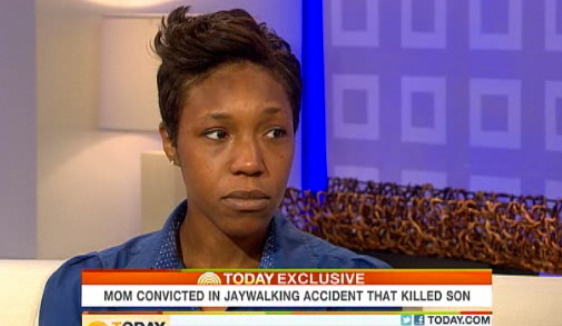
Another aspect of my internship was reading internet articles regarding my topic. Many topics struck out of me. One of the most influential topics that I read about was regarding the unfortunate tragedy of Raquel Nelson incident.
Raquel Nelson was a Georgia woman, and mother of three that received a year of probation due to the jaywalking death of her 4-year-old-son (Hanson, 2012). She was unfortunately convicted by a jury of vehicular homicide by letting her young son to jump into a busy street north of Atlanta on the night of April 10, 2010. She could have received as much as three years in prison. On that April day, she tried to cross the street with her three children when her 4-year-old son was killed by a hit-and-run driver. Ultimately, since she led her children onto a median instead of crossing at a crosswalk, she was then charged and convicted of vehicular homicide. There were petitions for her sentence to be more lenient. The main cause of her son’s death was due to poor/deteriorating infrastructure.  
According to grist.org:
Transportation systems, and streets, need to be not only smart and equitable They also need to be safe. According to the Leadership Conference’s report, Hispanic pedestrians suffer a death rate 62 percent higher, and African Americans almost 70 percent higher, than non-Hispanic whites (Adler, 2011).  
She was hit by Jerry Guy, a guy who was drinking earlier while on pain medication. Furthermore, he was partially blind and had two previous hit-and-run convictions from 1997, according to the records. He, who fled the scene, pleaded guilty to hit-and-run charges, thus he was sentenced to only six months in prison (Hanson, 2012).
These are questions that have to be answered:
What would you have done if you were in Raquel Nelson’s shoes and you needed to get your three kids home? Would you have chosen the shorter route and jaywalked or walked a little over half a mile to the cross walk before heading home (HLNtv.com Staff, 2013)?
This transportation justice issue is intertwined with a criminal justice issue.
Tawn Kennedy Meeting
Originally, I was supposed to meet him on Monday, February 24, 2014, but due to the fact that he fell ill, our meeting had to be rescheduled. Therefore, our meeting took place on Tuesday, March 11 at his office to talk with him about social justice, transportation, and youth empowerment.
I talked to him about his profession. He told me about how he orders bicycles for the teenagers of Santa Cruz, towards the end of our meeting we both took a walk to the Teen Center that was named after the African-American slave. I had a feeling that the teens present in that program come from lower income households, probably the Beach Flats area.
I could remember that I brought up a scenario involving a poor person living in the inner-city. I referred to Oakland, CA, since I am familiar with that inner-city, because I lived there when I was younger. I referred to Stockton, CA, because during the Spring 2012 semester at San Joaquin Delta College, I was enrolled as a student. The scenario was what happens if someone living in an inner-city public housing project, has to go somewhere? Let it be work, school, place of worship, store, etc.? This person is too poor to afford a private automobile. This person has to walk to the bus stop, and wait for a period of time for a bus to come and pick them up. We then discussed the violence that could claim the life of that person. We then discussed how this scenario has to deal with food justice and food deserts, because in inner-cities, there are many liquor stores, fast food restaurants, etc., and not many grocery stores where they sell fresh fruits and/vegetables. If that person wanted to go to the grocery store, they would have to catch the bus, walk a significant distance, and then get to the store. That person would obviously not be able to afford the nutritious food due to their level of income. This is obviously an undesirable, severe inconvenience. As a result, that person would be restricted to processed, high fructose corn syrup saturated food that is detrimental to one’s health, and causes obvious health problems. Due to financial limitations, that poor person most certainly not be able to afford the hospital bills.
I had to include the violence, because it goes hand-in-hand. Violence, poverty, drugs, despair, etc. When a person is limited due to their financial situation, this impacts what type of jobs are available to them. Most people understand that the majority of the best jobs available are located in the suburbs. Next, you must understand the type of jobs that are located in the inner-cities. These are minimum wage, fast food, jobs, since our inner-cities are full of fast food restaurants. This obviously is not justice.
As I have been working on my project, I have come to a realization that if the United States of America, probably the most affluent nation on the face of the earth, wants to improve as a nation, we must confront inequalities at all levels. The issues of social inequalities/racism with respect to education, employment, the environment, transportation, criminal justice, etc. are all intertwined. I have come to a conclusion that the common denominator is urban decay, and social structure. If we do not fix our deteriorating infrastructure in our once proud cities, we would not be able to solve our problems.   

Works Cited
1. "Ben Adler." Grist. N.p., n.d. Web. 14 Mar. 2014.
2. Hanson, Hilary. "Raquel Nelson Fights Murder Charges In Son's Jaywalking Death In Georgia." The Huffington Post. TheHuffingtonPost.com, 17 Apr. 2012. Web. 14 Mar. 2014.
3. "Jaywalking Mom Avoids Retrial for Son's Death." HLNtv.com. N.p., n.d. Web. 14 Mar. 2014.

Saturday, March 1, 2014

Jeff Speck on happiness and social justice, in addition to walkability

Jeff Speck has published an article called Ballet of the Sidewalk on MetropolisMag.com looking at what he didn't include in The Walkable City, happiness and social justice. It's a great, quick read that you will all enjoy. Here are two bits that I wanted to highlight:
"All the pleasures that were once provided publicly by the community are now provided privately by the middle-class house. The theater has been replaced by the giant-screen TV, the pool hall has made its way into the rec room, and the playground has become the backyard jungle gym.  
This is wrong. The privatization of the public realm means the end of community life, and we don’t need a new, better pope to tell us what that does to our spirit. [...] 
"Until now, quality of life was my ultimate measure. Now things don’t seem so simple. Somewhere, at the intersection of the quality-of-life city, the sustainable city, the equitable city, and the happy city, lies the good city. I don’t doubt that it is also the walkable city, but walkability alone does not get us there."

Friday, February 7, 2014

Chima's Project Update

I have started my project by proposing that I would do research on the issue of bicycling and social justice, by analyzing and reading about issues of urban biking. This week was a rough week for me. I just took my Conservation Biology midterm a few hours ago, and it did not go well for me. I am going through a very rough time right now, which is due to a variety of factors.What I want to do is focus on cities in the Bay Area and the Central Coast and learn and analyze how bicycling relates to everybody based on socioeconomic and racial/ethnic factors. Before I started my research, I thought that one of the main reasons that inner cities are not suitable for bicycling is due to unsafe environments, urban decay, and lack of funding to fix broken infrastructure, roads, and sidewalks. This is obviously prior to any formal research, so I hope that in the next couple of days I would be able to dig deeper in in this subject to be able to understand more. I also think about the young individuals that live in inner-cities that are deprived from the opportunity of being able to enjoy bike rides in their respective neighborhoods due to the fact that they live in unsafe neighborhoods plagued with violence, crime, drugs, prostitution, etc, which there suburban and/or rural counterparts do not have to experience. I also plan on meeting with Tawn Kennedy in order to be able to meet him and learn more about the importance of youth empowerment and what it means. The first thing I must accomplish is to complete my independent research first, prior to meeting with Tawn Kennedy to discuss bicycles, social justice, and youth empowerment. I hope to get a lot done this quarter because I have to complete 20 hours of internship work. Next week, I plan on probably uploading a Youtube video which shows what I am doing regarding bicycling and social justice.

Friday, January 17, 2014

Maryam's Transportation History

Write your transportation history - Think about the various modes of transportation that you've used in your life at different times and places. How do your experiences with these modes affect your perception of the world, your community, etc.? Have you had pivotal moments on buses, bike rides, car trips, etc. that have changed how you see the world?

One of my earliest memories was the purchase of a white Dodge minivan with a built in roof extension. I was at the dealership with my parents and two sisters, vastly unaware about what was happening at four years old. What I did know was that we drove home in a different car that day - a car that would come to see dozens of family road trips and the birth of my youngest sister. The Egg, as we called it, soon became a symbol of family unity and comfort. Looking back, it is no surprise how I was brought to value the automobile at a young age. Then I entered my teenage years. I began carpooling with the neighbors who traded one Mercedes SUV for another each month. Suddenly, the Egg was not cool. It was the opposite of cool. It was an incredibly lame assault to my desperate pursuit of acceptance from the snobby and self absorbed junior high school kids. I hated the Egg as I was conditioned to perceive cars as a status marker.

Eventually, the Egg broke down. To my wretched fourteen year old delight, we traded it in for a Nissan Armada. It was shiny, new, horribly gas inefficient, and one of the biggest cars on the road. I was driven around by my parents until I got a license. I hated that I had no control over my transportation. The city was hardly walk-able, and bikes were not culturally relevant enough to even consider.

My first car was a 2000 Mazda Millenia. For the first couple weeks, it was freedom on wheels. It was quickly apparent that owning a car came with a lot of responsibility, expense, inactivity, and anxiety. I sold it during the Summer before I moved up to Santa Cruz for college. While I expected to be disappointed, I was relieved. I truly felt as though a burden had been lifted. I bummed rides off my friends for the remainder of the summer, and everything changed afterwards.

In Santa Cruz, I relied on my feet and the bus. I loved it. I was breathing fresh air that smelled like redwoods, exercising, interacting with people and my environment, more aware of ecological impact, and truly happy. By the end of my Freshman year, I was working downtown at the Penny Ice Creamery. Suddenly the buses were not reliable enough (either that, or I wasn't), and I was struggling to get to work on time. So, I invested in a bicycle to get to work on the fly. Within a week, it was stolen. I had hardly gotten to know it, but I felt if someone had reached into my chest and ripped my heart out. It was a stark and eye-opening comparison to the way I felt when parting with my car.

After another month or so, I had saved up just enough to get a fixer-upper. I took the initiative to learn the basics of bicycle mechanics and get it up and running. Soon, I had the most beautiful bicycle that had ever existed in the history of bicycles. It was the love of my life, the apple of my eye. I was commuting to Cabrillo college from the west side four times a week, commuting to work downtown, and going on bike rides up and down the coast on the regular. I was introduced to the simple joy of night riding. I felt free and alive. It was a life-changing experience to travel with conviction. Alternative modes of transportation connected me to my community, the city, my body, and my bicycle.

Thursday, January 16, 2014

Camille's Transportation History

Write your transportation history - Think about the various modes of transportation that you've used in your life at different times and places. How do your experiences with these modes affect your perception of the world, your community, etc.? Have you had pivotal moments on buses, bike rides, car trips, etc. that have changed how you see the world?

I grew up in Eureka, CA, a town in Humboldt County that had its climax during a time of unregulated logging and fishing, where an abundance of resources was excitedly consumed and a town was built as a dwelling for these rugged laborers.  Now it’s made up of a mixture of conservative old people and liberal growers, probably in pursuit of a quiet, undemanding life in what’s left of the lush redwood forest that is Humboldt County.  In terms of geography, the town is somewhat sprawling with no central business hub, as most jobs were concentrated at the mills which were built on the outskirts of town. Because of this, I would guess that at least 90% of the population in Eureka owns a car. Growing up, I didn't know anyone who rode their bike except for the occasional recreational weekend ride, and as a kid I saw the bus system as a dirty, dangerous and unreliable last resort for transportation. The city itself is pretty flat and not too spread out so biking would have been an incredibly easy way to get to school or work. Using a car was such a normalized way of getting around that it almost seemed ridiculous to consider walking somewhere, even if it was less than a mile away. I realize now that Eureka is a strange, isolated place where people are unconscious (in a lot more ways than transportation) of overarching issues of sustainability.

Up until high school, my parents would drive me to school or anywhere I needed to go, but once I was old enough that they felt comfortable leaving me to walk, they often left me to find my own way to and from school. Because I saw walking as a painfully slow waste of time, I started skateboarding to and from school, which was drastically faster than walking and a lot more fun.

However, once I got my drivers’ license and my parents bought me a little Toyota, I started driving to and from school, as most of the more affluent kids did. There was a whole culture built around driving at my school; different parking lots informally designated to different social groups on campus: the hicks parked their trucks in the parking lot near the metal and the wood shops; the jocks and preps parked their expensive cars in the lot next to the language building; the seniors had their own lot, etc.

Once I graduated from high school and decided that I was going to UC Santa Cruz, I figured I’d buy a bike since my car had been totaled by a reckless lady who’d run a red light on me that summer. I had a mountain bike at the time but decided I wanted a road bike because it seemed like the hip thing at the time. I took my grandpa’s 1970s Univega Sportour to Porter College but was intimidated by the hilliness of the university so it sat locked up outside of my dorm for the entirety of my Freshman year. My sophomore year, I lived pretty far from campus, and, again inspired by my frustration with the sluggishness of walking and with my impatience in waiting for buses, I started taking the bike shuttle to campus and biking home. I began to recognize other people who rode their bikes a lot and started to see how my role as a bicyclist made a statement in the politics of sustainable transportation.

Now, my junior year, I use my bike more than ever not only as a means of beating traffic and avoiding the bus system, but for fun and exercise too! At this point it’s also a choice I feel I’ve consciously made, now that I have the means to buy a car but don’t find it a necessary or sensible means of transportation anymore.